
Revision Joint Replacement
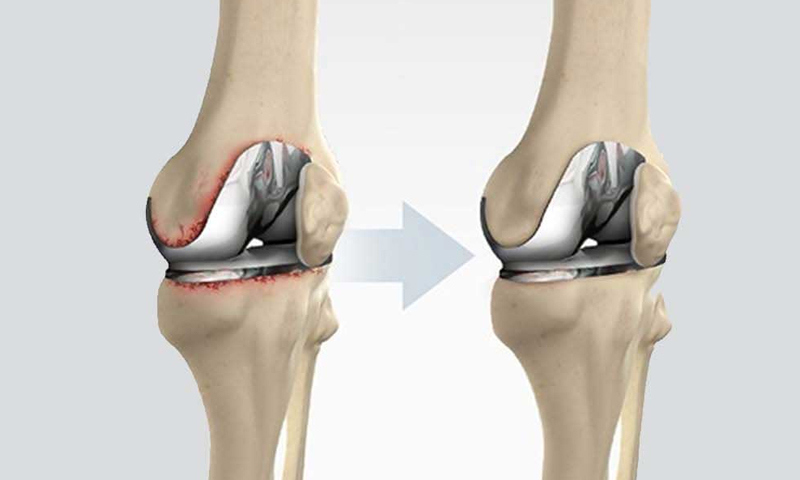
When a previously implanted hip or knee replacement begins to fail — due to implant loosening, wear, infection, instability, or periprosthetic fracture — revision joint replacement surgery becomes necessary. Dr. Gazanfar Patel is a highly experienced revision arthroplasty surgeon, capable of managing even the most complex reconstructive challenges with precision and care.
Revision surgery is significantly more demanding than primary joint replacement, requiring specialized implants, bone grafting techniques, and advanced surgical planning. Dr. Patel's fellowship training and extensive clinical experience make him uniquely equipped to handle these complex cases.
Common Reasons for Revision Surgery
1. Aseptic Loosening
Over time, the bond between the implant and bone may weaken due to mechanical stress or wear debris, causing pain and instability.
-
Management: Removal of failed components and reconstruction using revision-specific stems, augments, and bone grafting.
2. Periprosthetic Joint Infection (PJI)
Bacterial infection around the implant is a serious complication requiring staged revision — removal of all implant components and infected tissue, antibiotic treatment, followed by re-implantation.
-
Management: Two-stage revision with antibiotic spacers and targeted IV and oral antibiotic therapy.
3. Instability & Dislocation
Recurrent dislocation or instability may require component repositioning, liner exchange, or constrained implant designs to restore joint stability.
4. Periprosthetic Fractures
Fractures occurring around existing implants demand careful planning to stabilize the fracture while preserving or revising the prosthesis simultaneously.
Conditions Treated
-
Failed Primary Hip or Knee Replacement: Implant loosening, wear, or malposition from a previous surgery.
-
Periprosthetic Joint Infection: Deep infection around existing implants requiring complete exchange.
-
Bearing Surface Wear: Poly liner or acetabular cup wear causing osteolysis and bone loss.
-
Implant Fracture or Mechanical Failure: Structural failure of prosthetic components.
Why Choose Dr. Gazanfar Patel for Revision Surgery?
-
Advanced Revision Expertise: Specialized training in complex revision arthroplasty acquired during fellowship in Sydney, Australia.
-
Bone Reconstruction Skills: Experienced in structural allografts, impaction bone grafting, and metallic augment reconstruction.
-
Infection Management Protocol: Established two-stage revision protocols with culture-directed antibiotic therapy.
-
Multidisciplinary Approach: Collaborates closely with infectious disease specialists, radiologists, and rehabilitation teams.
Patient Journey & Recovery Expectations
-
Thorough Pre-operative Workup: Blood tests, advanced imaging, joint aspiration, and 3D CT planning to understand extent of bone loss and implant failure.
-
Staged or Single-Stage Surgery: Treatment plan customized based on cause of failure — infection cases typically require two-stage revision.
-
Careful Rehabilitation: Weight-bearing restrictions and physiotherapy tailored to the specific reconstruction performed.
-
Long-Term Follow-Up: Regular monitoring with X-rays and clinical assessment to ensure stability of the revision implants.